Discover Metal Polishing Machines: Informative Knowledge, Process Explanation, and Useful Details
Metal polishing machines are industrial and workshop systems designed to improve the surface quality of metal components through controlled abrasion and finishing processes. These machines are used to remove surface imperfections, scratches, oxidation, and machining marks while enhancing smoothness, reflectivity, and appearance. Metal polishing plays a crucial role in preparing components for functional use, decorative applications, or further processing such as coating and plating.
The development of metal polishing machines evolved alongside advancements in metal fabrication and manufacturing. Early polishing relied heavily on manual tools, which produced inconsistent results and required significant labor. Modern metal polishing machines introduced mechanical consistency, adjustable speed control, and specialized polishing media to achieve uniform surface finishes across a wide range of metals including steel, aluminum, brass, copper, and alloys. Today, metal polishing machines are used in automotive manufacturing, aerospace components, household hardware, medical equipment, architectural fittings, and industrial fabrication.
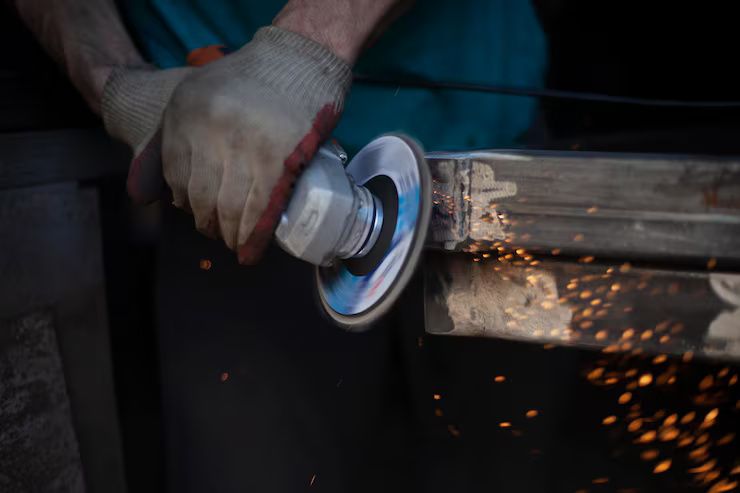
Importance
Metal polishing machines are important because surface quality directly affects product performance, durability, and visual appeal. Polished metal surfaces often exhibit improved corrosion resistance, reduced friction, and enhanced cleanliness.
These machines help address several critical challenges:
-
Removing surface defects and irregularities
-
Achieving uniform surface finish across components
-
Improving resistance to corrosion and wear
-
Enhancing aesthetic appearance for decorative products
-
Preparing surfaces for coating, painting, or plating
Manufacturers, metal fabricators, quality inspectors, and finishing technicians rely on metal polishing machines to meet industry standards and customer expectations. As precision manufacturing expands, consistent surface finishing has become an essential step in metal processing workflows.
Recent Updates
Between 2024 and 2025, metal polishing technology advanced with improvements in automation, dust control, and finishing accuracy.
Key updates include:
-
January 2024: Variable-speed polishing motors improved surface control across different metal types.
-
May 2024: Advanced abrasive compounds enhanced polishing efficiency while reducing material removal.
-
September 2024: Integrated dust-extraction systems improved workplace cleanliness and operator safety.
-
February 2025: CNC-controlled polishing machines enabled repeatable finishing for complex metal shapes.
-
2025 Trend: Increased adoption of robotic polishing arms for high-volume and precision-critical applications.
These developments reflect the industry’s shift toward controlled, automated, and cleaner metal finishing processes.
Laws or Policies
Metal polishing machines are influenced by regulations related to workplace safety, environmental protection, and industrial equipment compliance.
Key regulatory considerations include:
-
Occupational Safety Standards: Requirements for guarding, emergency stops, and operator protection.
-
Dust and Air Quality Regulations: Control of metal dust and particulate emissions during polishing.
-
Electrical and Mechanical Safety Rules: Compliance with machinery safety and electrical standards.
-
Noise Exposure Guidelines: Limits on permissible noise levels in industrial environments.
-
Waste Management Policies: Proper handling and disposal of used abrasives and polishing residues.
These policies ensure safe machine operation, reduced environmental impact, and responsible metal finishing practices.
Tools and Resources
Several tools and resources support effective metal polishing operations:
-
Surface Roughness Testers – Measure finish quality and consistency.
-
Abrasive Selection Charts – Help choose appropriate polishing wheels and compounds.
-
Dust Collection Units – Maintain clean and safe working conditions.
-
Speed Control Panels – Adjust polishing intensity for different metals.
-
Maintenance Checklists – Support routine inspection and performance stability.
These tools help maintain quality control, operator safety, and consistent polishing outcomes.
Table: Types of Metal Polishing Machines and Applications
| Machine Type | Polishing Method | Typical Application |
|---|---|---|
| Bench Polishing Machine | Fixed rotating wheels | Small metal parts |
| Belt Polishing Machine | Continuous abrasive belt | Flat and curved surfaces |
| Centerless Polishing Machine | Through-feed polishing | Pipes and rods |
| CNC Polishing Machine | Automated surface control | Precision components |
| Robotic Polishing System | Programmable polishing paths | High-volume industrial us |
FAQs
1. What is the main function of a metal polishing machine?
Its function is to improve metal surface quality by removing imperfections and enhancing smoothness and appearance.
2. Which metals can be polished using these machines?
Steel, stainless steel, aluminum, brass, copper, and various metal alloys.
3. How does polishing differ from grinding?
Grinding removes larger amounts of material, while polishing focuses on surface refinement and smoothness.
4. What factors affect polishing quality?
Abrasive type, polishing speed, pressure, compound selection, and metal hardness.
5. Are metal polishing machines suitable for automation?
Yes, many modern systems support CNC and robotic integration for consistent results.
Conclusion
Metal polishing machines are a vital part of modern metal processing and finishing operations. Their ability to produce smooth, uniform, and visually appealing surfaces supports both functional and decorative applications across industries. Advances in automation, dust control, and surface measurement have significantly improved efficiency and consistency.
Regulatory frameworks guide safe operation and environmental responsibility, while supporting tools such as roughness testers and dust collectors help maintain high-quality standards. As industries demand higher precision and improved surface performance, metal polishing machines will remain essential in achieving reliable and repeatable finishing results.