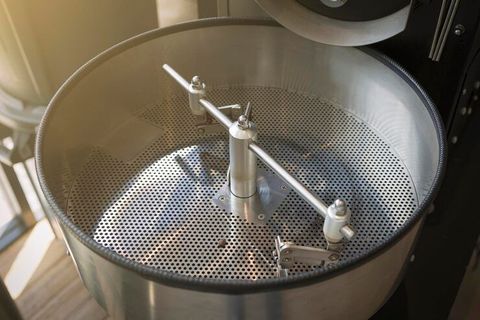
Coating Machine Information: Learning Help, Discoveries, Details, and Useful Advice
Coating machines are specialized equipment designed to apply substances—such as paints, films, powders, adhesives, or pharmaceuticals—to various surfaces. These machines serve many industries: manufacturing, electronics, clean energy, pharmaceuticals, and more. They exist to ensure uniform, efficient, and controlled application of protective or functional layers, improving durability, appearance, or performance.
Coating machines range from tablet-coating devices in pharmaceuticals to industrial systems that deposit thin films on metal, plastic, or glass.These machines use methods like slot-die, PVD, cold spraying, powder coating, or thermal spray.
Importance
Coating machines matter because:
- Protection and longevity: They enhance resistance against corrosion, wear, UV exposure, or microbial growth.
- Product performance: In electronics or optics, coatings improve precision, functionality, or appearance.
- Efficiency and consistency: Automated systems reduce waste and human error, ensuring repeatable quality.
They affect:
- Manufacturers across sectors (automotive, electronics, pharma, renewable energy).
- Consumers, who benefit from better product quality and safety.
- Environment, by enabling greener technologies (low-VOC, sustainable coatings).
Key problems coating machines solve:
- Uneven or excessive coating
- Process inefficiency
- Environmental and safety concerns
Recent Updates
Here are major advances observed through 2024 and into 2025:
Sustainable and high-performance coatings
Greener coatings are now mainstream. Low-VOC, water-based, and bio-based formulations—including paints using plant oils—are increasingly adopted to align with environmental goals.
Smart and nanotechnology-enhanced coatings
Self-healing and stimuli-responsive coatings—reacting to humidity, temperature, or pressure—are being deployed in transport, healthcare, and food processing.
Nanomaterials are used widely to improve UV resistance, corrosion protection, and mechanical strength.
Industry 4.0 integration and monitoring
Coating machines increasingly feature IoT connectivity, AI quality control, digital twins, and automated vision inspection for real-time monitoring, defect detection, and process optimization.
Advanced methods and market growth
Innovations in powder coating technologies—automation, energy efficiency, eco-friendly lines—are gaining momentum.
The global market is growing rapidly, projected to reach tens of billions USD by 2025–2032, with a CAGR around 6-7 %.
Other technical advances include slot-die coating for thin uniform films with minimal waste—especially useful in solar, batteries, displays—and cold spraying, which applies coatings without high temperature to preserve material properties.
Industry highlights
- At the European Coatings Show (March 25–27, 2025), over 1,200 exhibitors showcased sustainable formulations, digital manufacturing tools, and advanced materials.
- In India, Mitsui Chemicals established a technical center (March 13, 2025) with various coating machines (gravure, reverse gravure, air-knife) and analyzers to support local needs.
Laws or Policies
In India, machinery—including coating equipment—must comply with the Omnibus Technical Regulation (OTR) Order, issued 28 August 2024 by the Ministry of Heavy Industries.
This mandates conformity with Indian Standards (Type A: IS 16819:2018/ISO 12100:2010; Type B and C standards) and BIS certification.
Compliance was extended to 1 September 2026, allowing industries more time to adapt.
This applies to machines in manufacturing, but as of mid-2025, license applications are not fully live—the BIS portal only supports pre-registration.
MSMEs face complexity and ambiguity over component-level applicability and unclear procedures.
Tools and Resources
| Resource Type | Purpose |
|---|---|
| Technical support centers | Provide hands-on expertise and testing environments |
| Industry reports and analyses | Offer insights into trends, sustainability, and innovation |
| Application-oriented guides | Help select machines based on industry use cases |
| Technical information sites | Explain coating methods and scalability |
| Academic research | Support advanced quality control and inspection methods |
FAQs
What types of coating machines exist?
There are many types—tablet coaters in pharma, powder coating systems, slot-die, PVD, cold spray, thermal spray, gravure, reverse-gravure, air-knife, and more—each tailored to substrate, coating material, precision, or scale.
Why is slot-die coating significant?
Slot-die coating enables uniform, thin film application over large or flexible substrates with minimal waste; it suits solar cells, batteries, displays, and scalable production lines.
How do smart coatings and sensors improve performance?
Smart coatings extend lifespan and reduce maintenance. Integrated sensors and AI systems enable real-time defect detection, thickness control, and predictive maintenance.
What regulations impact coating machines in India?
The OTR Order (Aug 2024) requires BIS certification for machines, with compliance extended to September 2026.
What challenges do MSMEs face with these regulations?
Small manufacturers must manage complex standards, unclear component scope, and incomplete application systems, creating uncertainty in compliance processes.
Conclusion
Coating machines play a crucial role across industries—providing protection, performance, and precision.
The past year (2024–2025) has seen significant shifts toward sustainability, smarter coatings, and Industry 4.0 integration.
Markets, especially for powder coating, are expanding rapidly.
In India, regulatory frameworks add compliance complexity, but available tools and resources support better understanding and implementation.
As technology evolves, coating machines are becoming more efficient, responsive, and environmentally aligned—making them essential tools in modern manufacturing.